
Pope County Probate Division
Probate matters are filed in Pope County District Court. The research found no separate county probate court page or elected probate judge. MCRO document access is more favorable for probate than for many family matters: public documents filed on or after July 1, 2015 are available for Formal Probate, Other Probate, Guardianship and Conservatorship, and Trust case types when publicly accessible.
Pope County District Court
Probate Division of District Court
130 E. Minnesota Avenue
Glenwood, MN 56334
(320) 424-7170
Monday-Friday, 8:00 a.m.-4:30 p.m.
Pope County Probate Terms
Probate records use terms that are easy to misread. A will file may include a testator, personal representative, devisees, heirs, claims, notices, and court orders. Guardianship and conservatorship cases may involve protected-person data, so access can be more limited than a standard estate file.
- Testator
- A person who made a will.
- Executor
- A common term for the person named to carry out a will; Minnesota often uses personal representative.
- Intestate
- Dying without a valid will.
- Guardianship
- Court-supervised personal decision-making authority for another person.
- Conservatorship
- Court-supervised financial management for a protected person.
Search Pope County Probate Records
Use MCRO Case Search for public probate case information. Use Document Search only when the case number is known. Probate case numbers often use the 61 county prefix and PR case code in public notices. Search by decedent, personal representative, interested party, business, or trust name when public, but use a case number for the best result.
| Field Label | Type | Required | Notes |
|---|---|---|---|
| MCRO case number | Text | Optional but best | Probate notices may use 61-PR-YY-### formats. |
| Party or person name | Text | Optional | Search decedent, personal representative, or interested party. |
| Business name | Text | Optional | Useful for trust or entity parties. |
| Document Search case number | Text | Yes | Required for document lookup. |
| County filter | Dropdown if shown | Optional | Select Pope County where available. |
Pope County Probate Fees
The Pope County District Court fee schedule lists probate-specific and copy fees. Filing fees can change, and fee waiver issues are case-specific, so confirm with Court Administration before filing or requesting copies.
| Probate Item | Fee |
|---|---|
| Deposit of wills for safekeeping | $27 |
| Estates, trusts, guardianships, conservatorships first paper filed | $322 |
| Trust accounts, partial, final, or annual | $55 |
| Certified copy from proceeding | $14 |
| Exemplified and certified copy | $28 |
The Minnesota court fee statute is one source behind district-court fees.
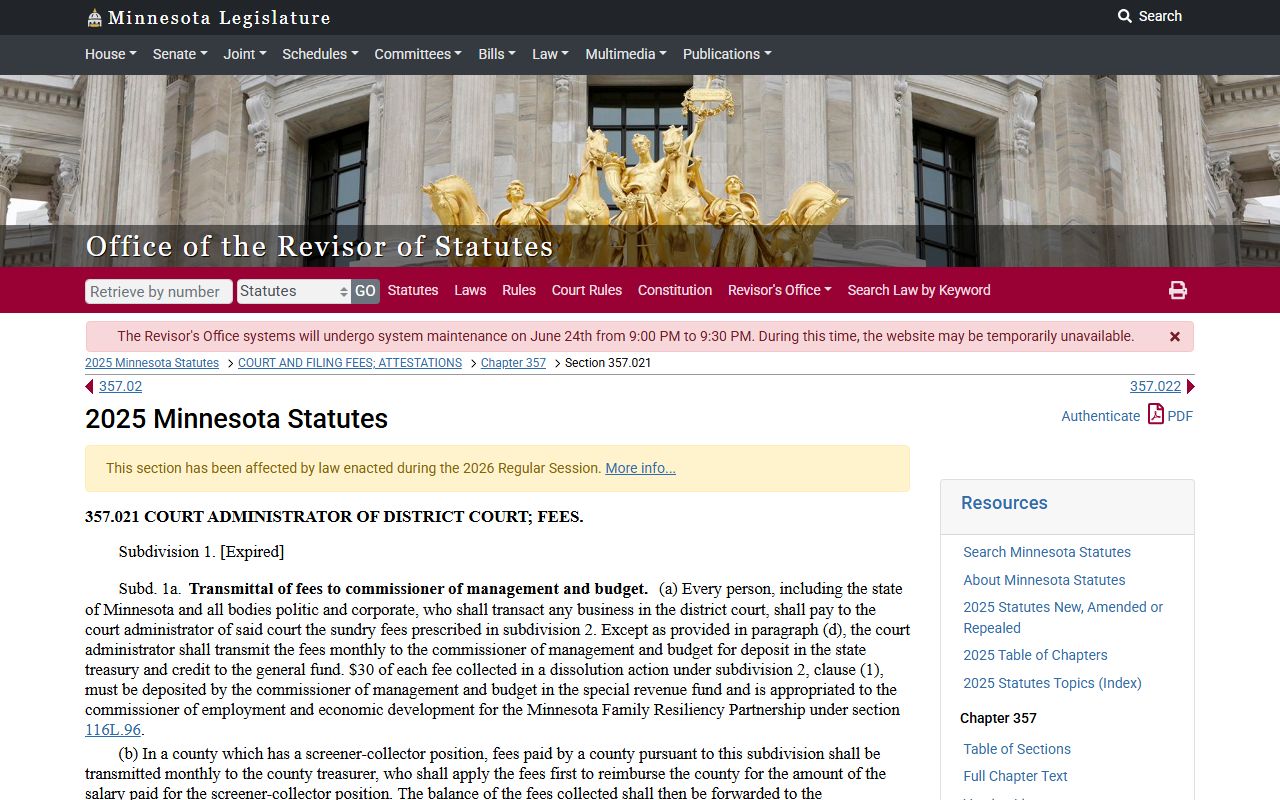
Use the statute with the Pope County fee schedule because the county schedule gives the local current listing.
Pope County Probate File Contents
Probate files can include wills, petitions, notices, inventories, orders appointing personal representatives, creditor claims, accountings, trust documents, guardianship filings, conservatorship filings, and closing documents. Public notices often warn creditors to present claims within a fixed time after notice.
| Field | What It Shows |
|---|---|
| Court | State of Minnesota, Pope County, Eighth Judicial District, District Court, Probate Division. |
| File number | Probate number such as 61-PR-YY-###. |
| Estate or decedent | Name of the estate or deceased person. |
| Personal representative | Person appointed or proposed to manage the estate. |
| Creditor deadline | Claim deadline from probate notice. |
| Documents | Petitions, orders, notices, wills where public, claims, accountings, and closing papers. |
The Minnesota probate creditor-claims statute is important for estate notices.
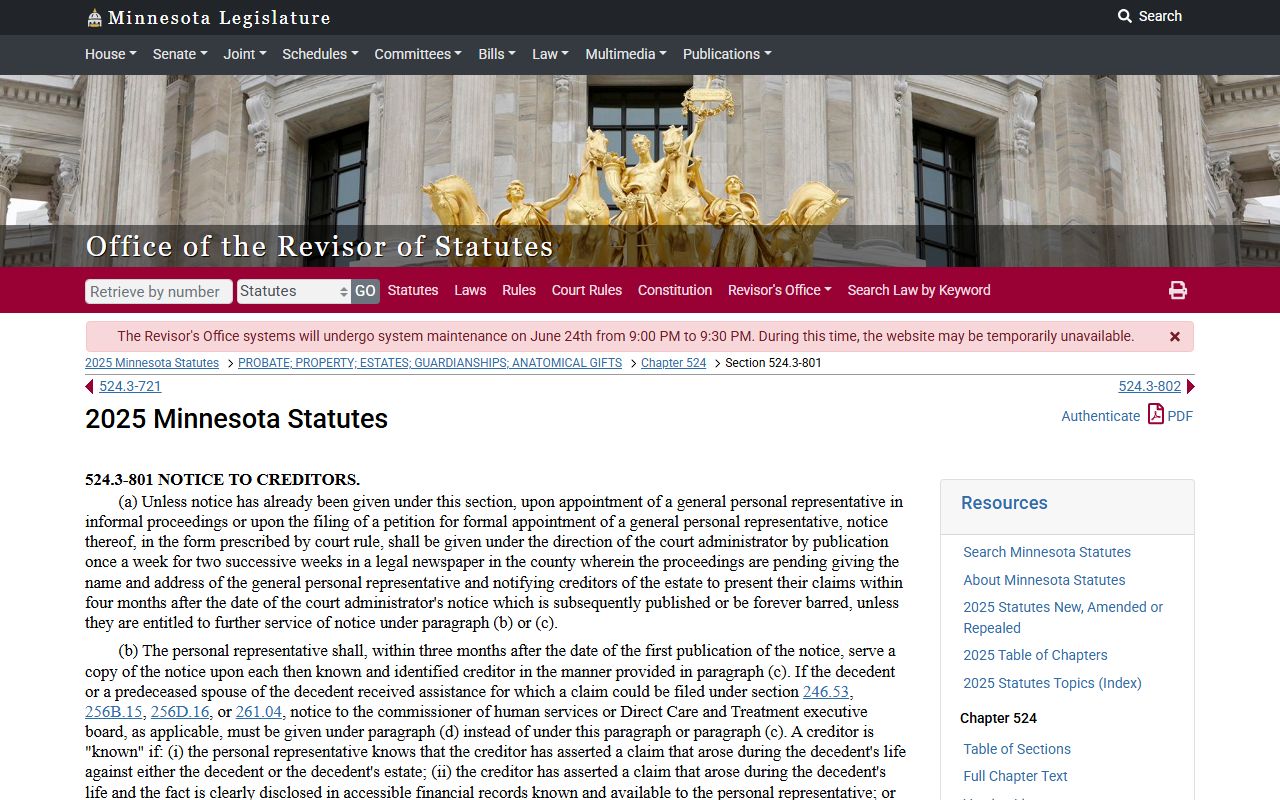
Creditor-claim timing can affect estate administration and should be checked in the actual court notice.
Restricted Pope County Probate Records
Guardianship, conservatorship, protected-person, minor, medical, financial, juvenile-protection, and sealed materials may be restricted. Probate records may also overlap with dissolution, eviction, child-protection, and other court-record restrictions when a person’s legal status or family circumstances are involved. Do not assume that every probate-related document is remotely available.
The Minnesota juvenile protection records statute is relevant to child-protection limits cited in county inventory.
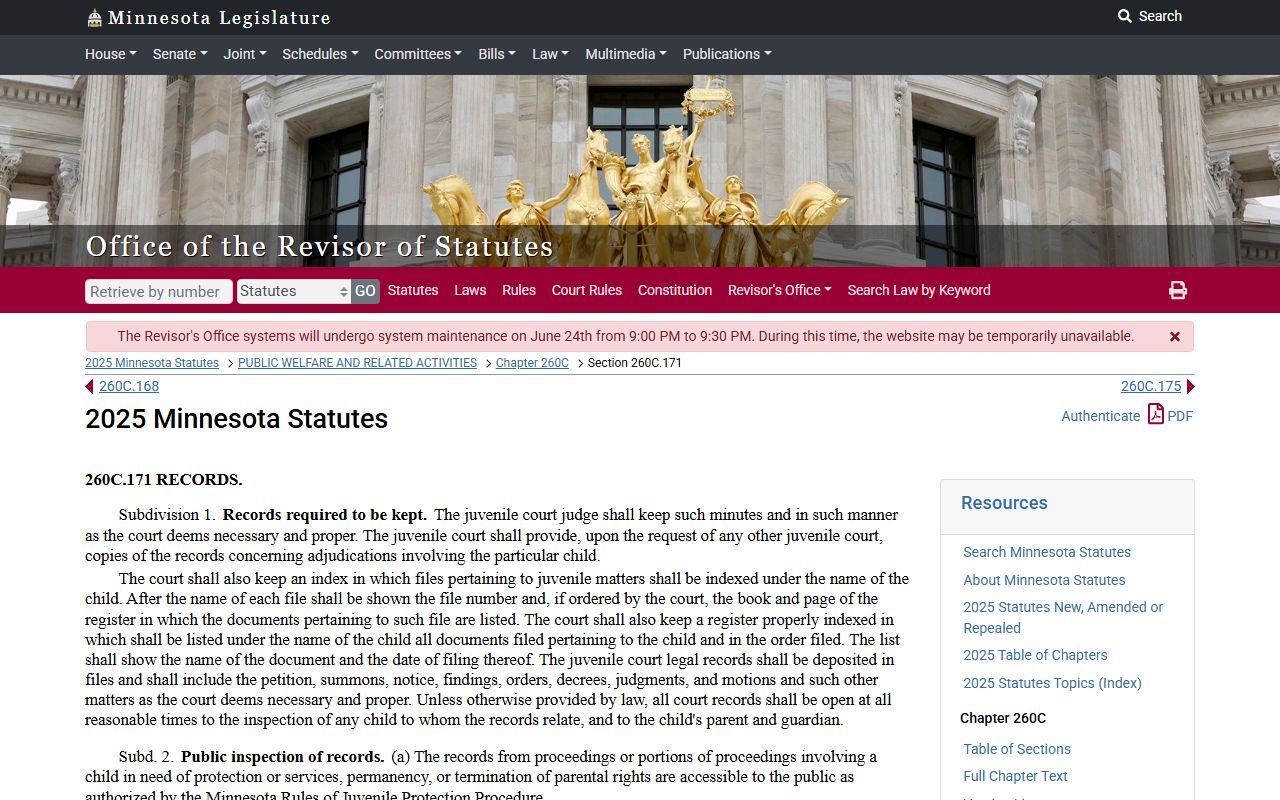
Juvenile and protected-person limits are one reason courthouse access does not equal full public internet access.
The Minnesota dissolution statute and eviction expungement statute appear in related fee and restriction research.
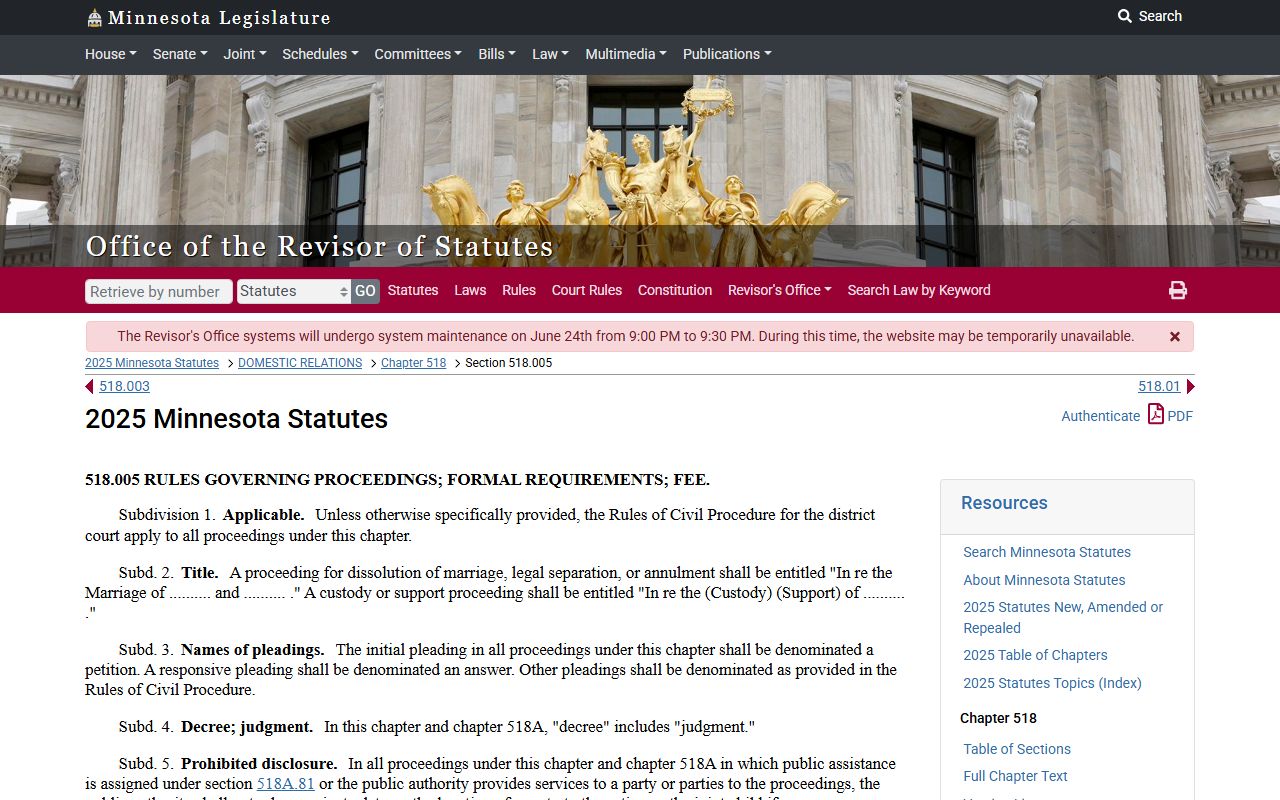
Dissolution records are separate family files, but the statute appears in the same court-fee ecosystem as other District Court records.
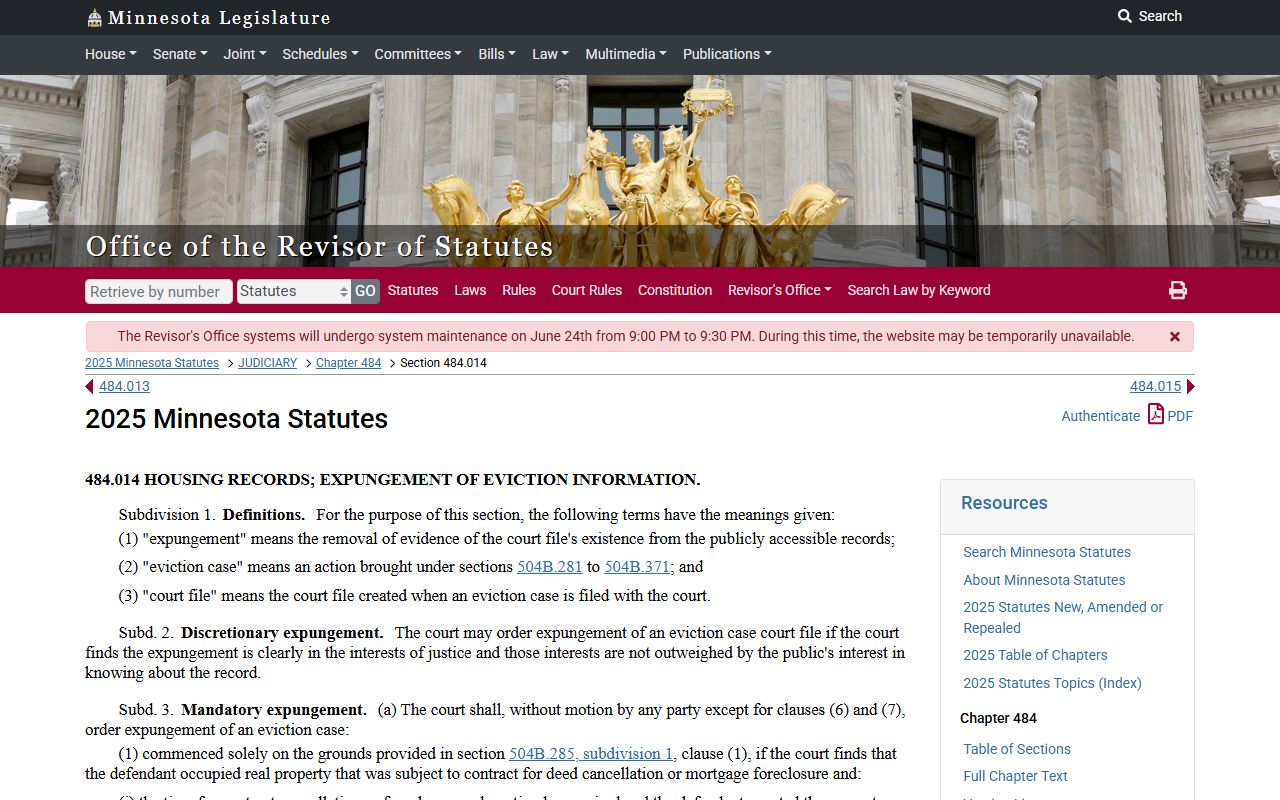
Expungement limits reinforce the broader rule that some public court subjects are not fully open online.
Pope County Probate Process
A probate matter usually starts by deciding whether District Court probate is needed and whether the estate is formal, informal, or possibly handled outside a full probate case. If venue is proper in Pope County, the filing goes to Pope County District Court. The first-paper fee for estates, trusts, guardianships, and conservatorships is listed at $322, while deposit of a will for safekeeping is listed at $27.
After filing, notices may go to heirs, devisees, interested persons, and creditors. A personal representative may be appointed to manage estate assets, inventory property, handle claims, address taxes, distribute property, and close the estate. Creditor claims may be governed by the Minnesota probate creditor-claims statute, and notices may warn creditors that claims not presented within the notice period can be barred.
For older files, paper records, certified copies, or documents not in MCRO, contact Court Administration. For private protected-person, minor, medical, or financial information, expect restrictions. A probate search should not be used to infer that every estate detail is open to the public.
Pope County Probate Follow-Up
Probate follow-up usually depends on the file type. A decedent estate may require a petition, will, notice, creditor claim, inventory, order, accounting, or closing document. A guardianship or conservatorship may require more restricted handling because protected-person and financial data can be private or sealed.
When MCRO does not show a public document, use the case number with Court Administration. Public probate documents after July 1, 2015 are often easier to find remotely in listed probate case types, but older records and paper files may still require local courthouse access.